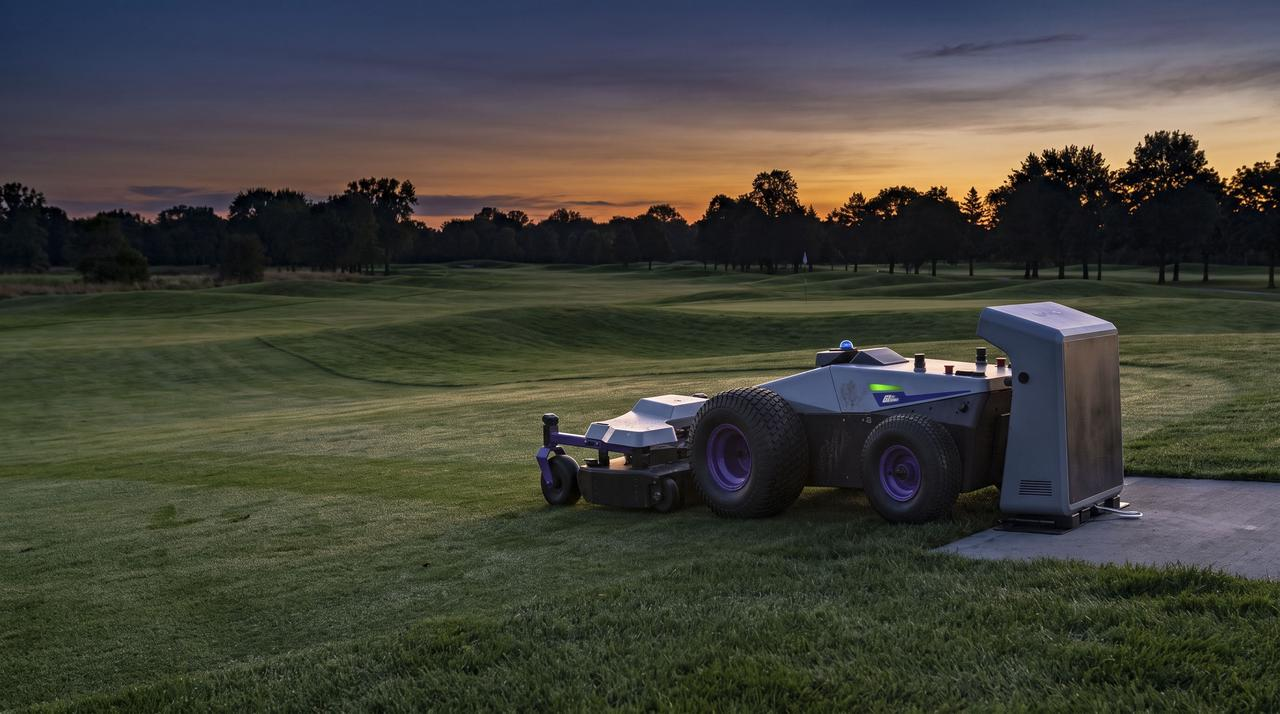
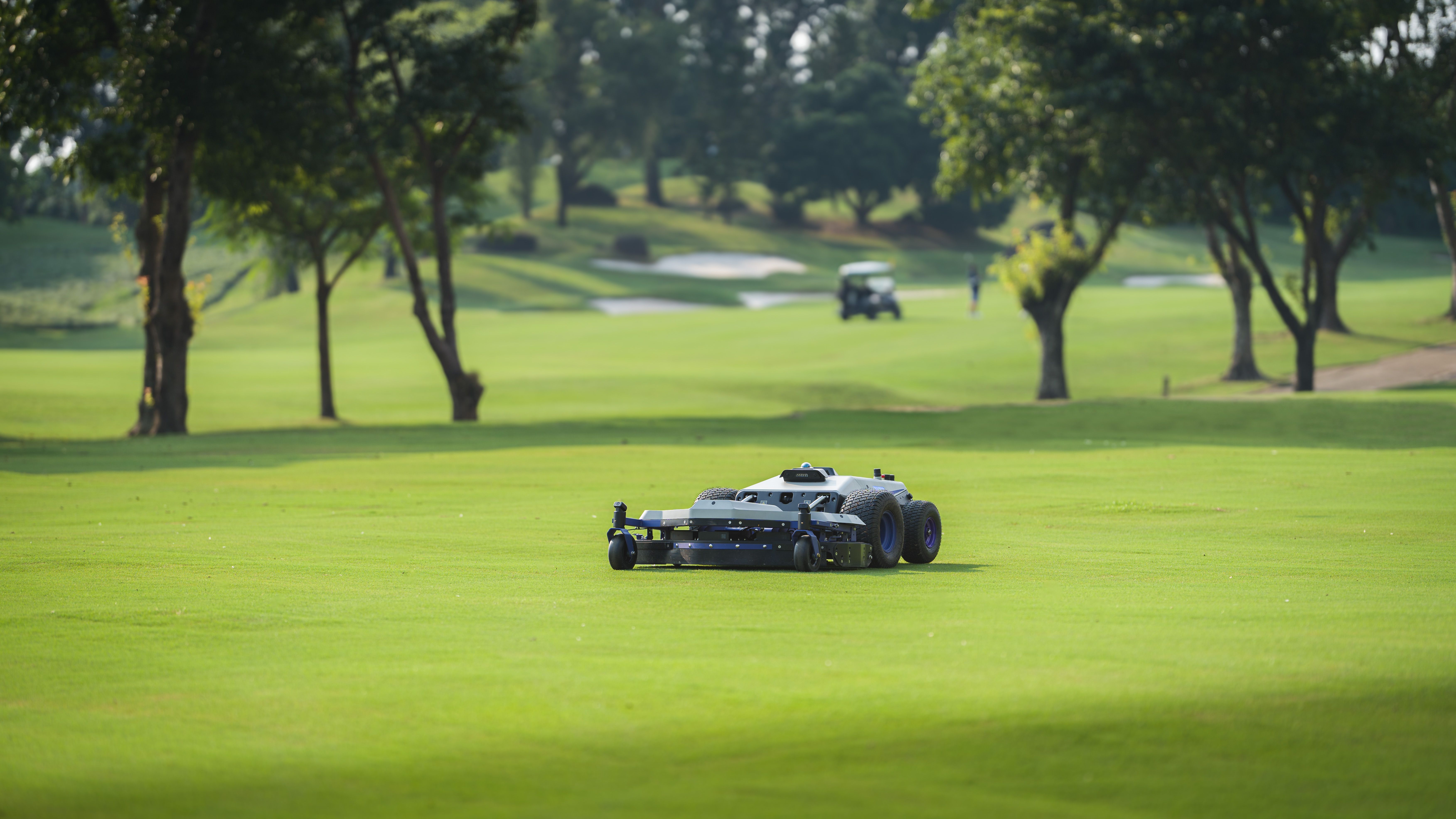
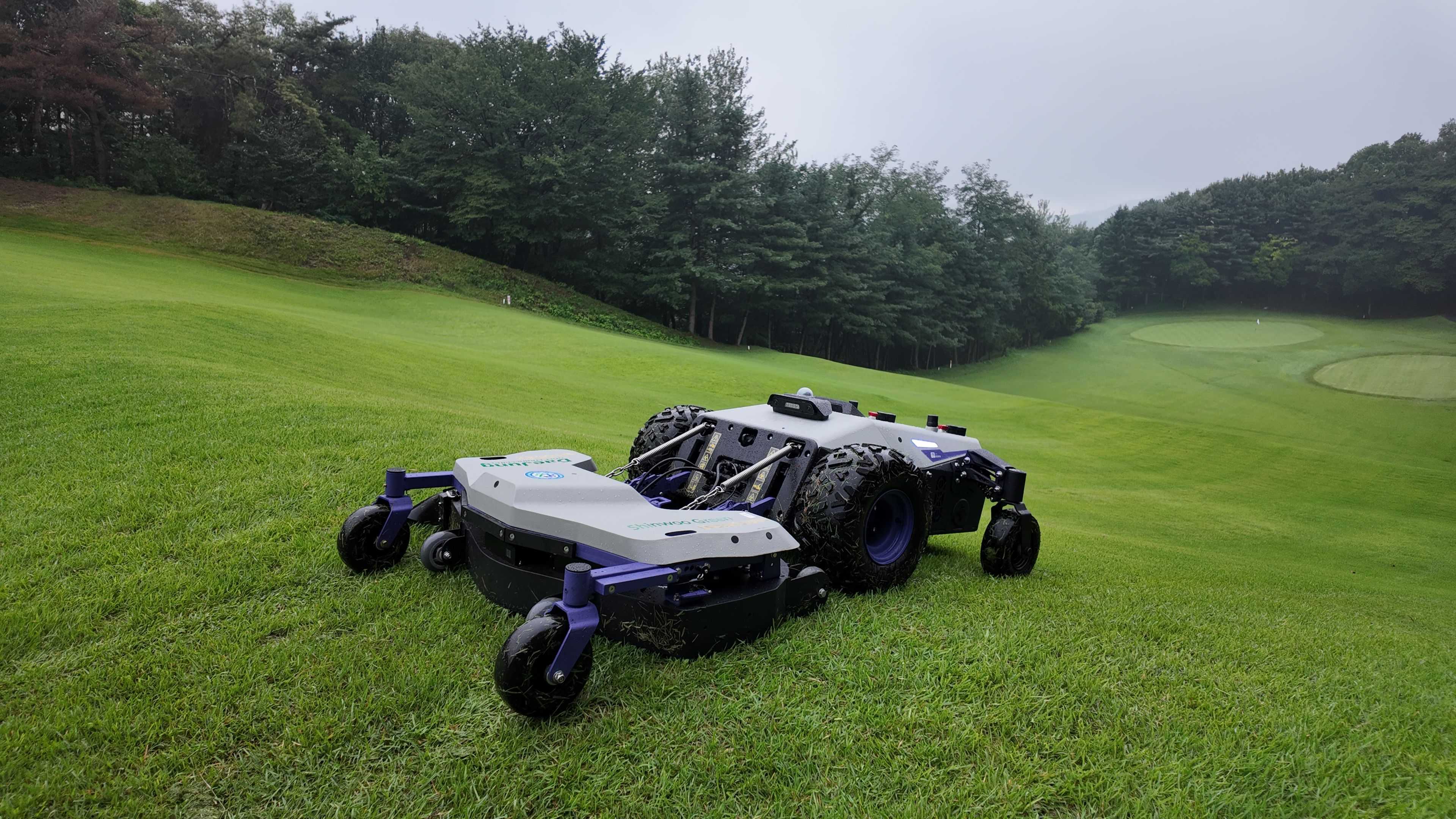
PANDAG G1 in Park Maintenance: Navigating Trees, Paths and Public Spaces
Park maintenance often requires mowing around trees, paths, and public facilities. This user case shows how PANDAG G1 uses autonomous navigation and obstacle detection for designated mowing tasks in real-world park environments.
01 Inside a Real-World Park Environment
Mowing in a Space That Is Always Changing
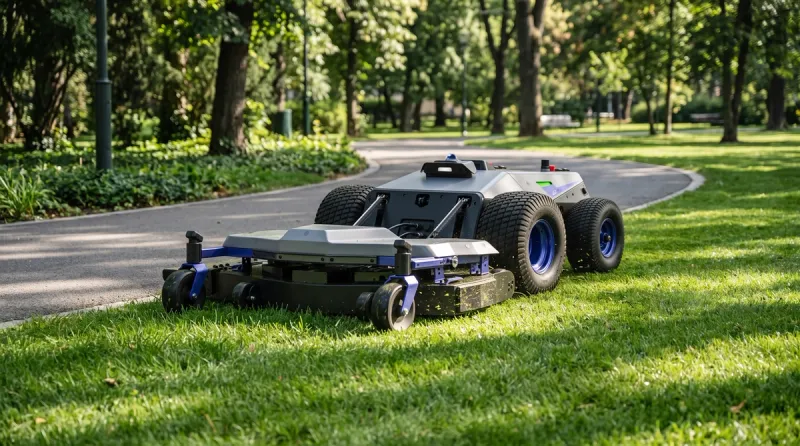
Park maintenance takes place in environments that are more complex than an open lawn.
A typical park may include large grass areas alongside trees, paths, benches, planted areas, playgrounds, sports facilities, and other public infrastructure.
At the same time, parks remain active public spaces. Pedestrians may move through different areas, maintenance vehicles may access the site, and the conditions around a mowing area can change throughout the day.
For maintenance teams, the challenge is not simply covering the grass. Mowing needs to be carried out within a defined area while accounting for the surrounding environment.
This creates a practical requirement for a commercial mower that can navigate structured outdoor spaces and detect obstacles as it works.
02 Defining G1’s Mowing Areas
Separating Mowing Tasks From the Wider Park
Not every part of a park needs to be mowed in the same way or at the same time.
Large lawn areas may have recurring mowing requirements, while planted areas, paths, facilities, and other non-mowing zones need to remain outside the designated operating area.
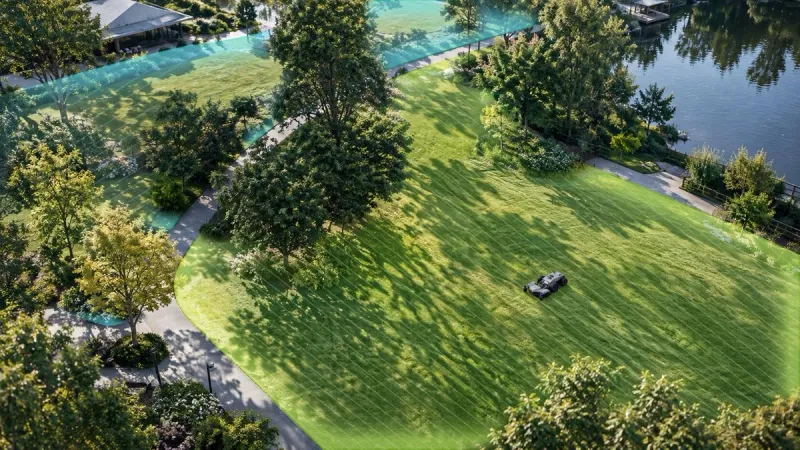
The maintenance team first determines where mowing is required and identifies an area that is suitable for autonomous operation.
G1 is then prepared for the designated mowing task.
This creates a clear boundary between the area being maintained and the wider park environment, allowing G1 to focus on the assigned mowing operation while the maintenance team continues to manage other areas and tasks.
03 Mowing Around Trees and Paths
Navigating Structured Green Spaces
Trees and paths are common features in parks, but they can make mowing more complex than working across an open field.
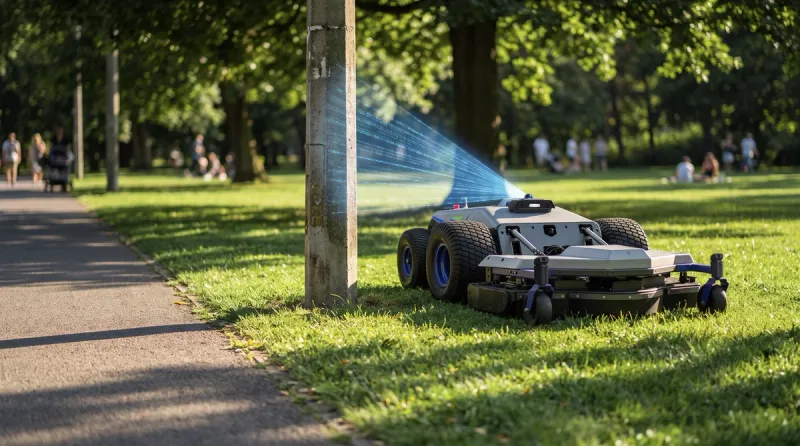
Tree-lined areas can also create conditions where satellite signals become less reliable. PANDAG G1 combines RTK, LiDAR, AI Vision, and 4G to support navigation in environments where trees or other structures can affect positioning conditions.
LiDAR and AI Vision also provide environmental perception for obstacle detection, helping G1 recognize objects around its operating area.
This allows the mower to work within designated lawn areas while navigating around fixed features such as trees and path edges.
The maintenance team remains responsible for determining the operating area and task, while G1 handles the designated autonomous mowing operation.
04 Navigating Park Facilities and Obstacles
Detecting Objects Within the Operating Environment
Public parks contain more than natural obstacles.
Benches, signs, bins, equipment, temporary objects, and other facilities can be located around lawn areas. Some may remain in fixed positions, while others can change from one day to another.
For autonomous mowing in these environments, detecting surrounding objects is an important part of the operation.
PANDAG G1 uses LiDAR and AI Vision for real-time obstacle detection, supporting recognition of people, benches, trees, and other objects around the mower.
This is particularly relevant in commercial park maintenance, where the mowing area is part of a larger public environment rather than an isolated lawn.
05 Operating Around Park Activities
Fitting Mowing Into Public-Space Operations
A park does not stop operating while maintenance work is taking place.
Depending on the site, lawn areas may be used by pedestrians, families, sports groups, or other visitors throughout the day. Maintenance activities therefore need to be coordinated with the way the space is being used.
The maintenance team determines an appropriate area and operating window for G1 based on site conditions and park activities.
G1 then carries out the designated autonomous mowing task within the prepared area.
By separating the mowing task from the wider maintenance schedule, the team can continue managing other park work while G1 handles the assigned mowing operation.
06 Building a Recurring Park Mowing Routine
From Individual Tasks to Ongoing Maintenance
Park mowing is not a one-time task. Grass growth, weather, season, and site usage can all affect how frequently different areas need to be maintained.
Once a suitable mowing area has been identified, the same basic workflow can be repeated as needed:
Identify → Prepare → Mow → Review
The maintenance team identifies the area and determines when mowing is required.
The team then prepares G1 for the designated operation.
G1 carries out the autonomous mowing task while navigating the defined operating area and detecting surrounding obstacles.
After the task is completed, the team reviews the area and determines when further mowing is required.
The timing and frequency can change with seasonal conditions, but the overall workflow remains consistent.
07 A Platform for Different Park Maintenance Needs
Extending Beyond a Single Mowing Task
Park maintenance can involve more than mowing open lawn areas.
Different sections of a site may require different tools, operating methods, or maintenance tasks. PANDAG G1 is designed as a modular commercial robotic mower, with a common robotic platform that can support different mowing and maintenance applications as the attachment system develops.
For park operators and commercial grounds teams, this provides a way to build on the same robotic platform as suitable applications become available, while continuing to use conventional equipment for tasks that require different tools or methods.
G1 can therefore begin with defined autonomous mowing tasks while providing a platform that can support broader maintenance applications over time