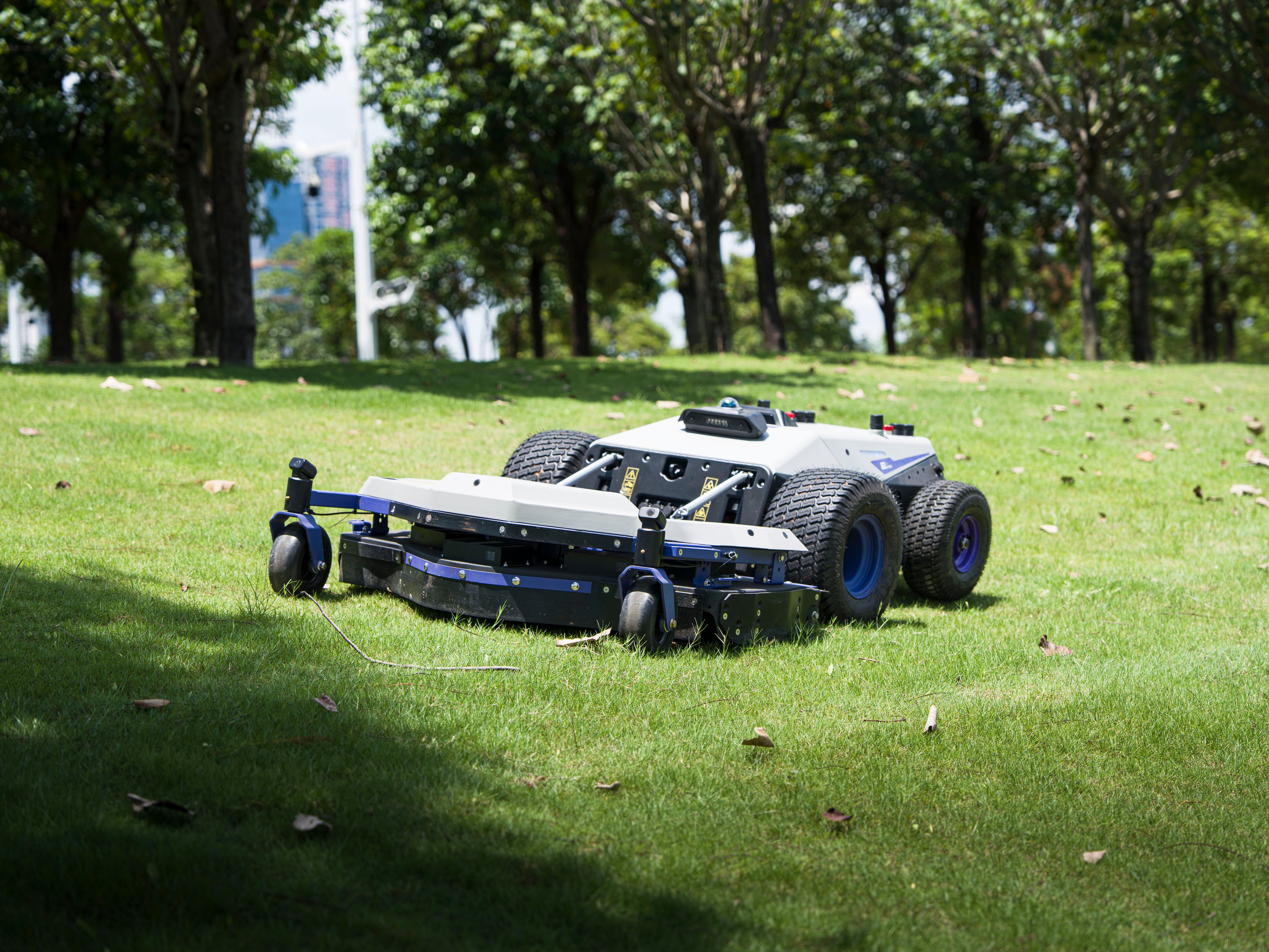
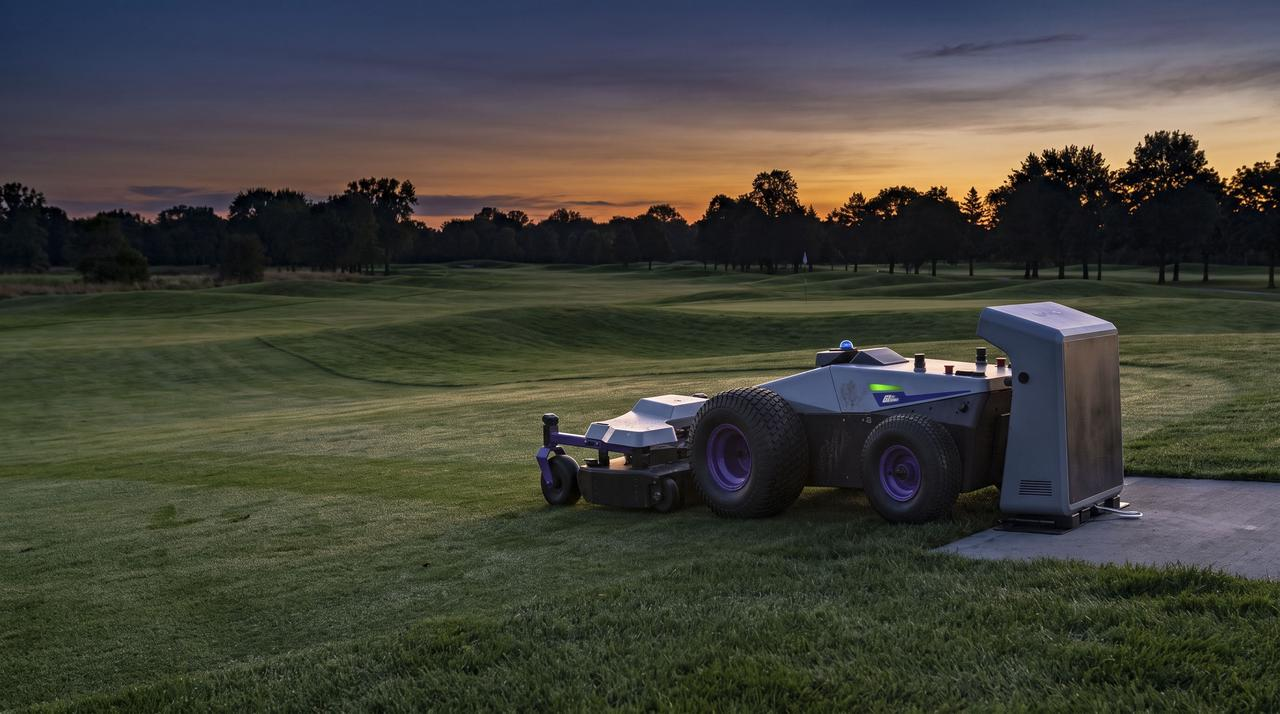
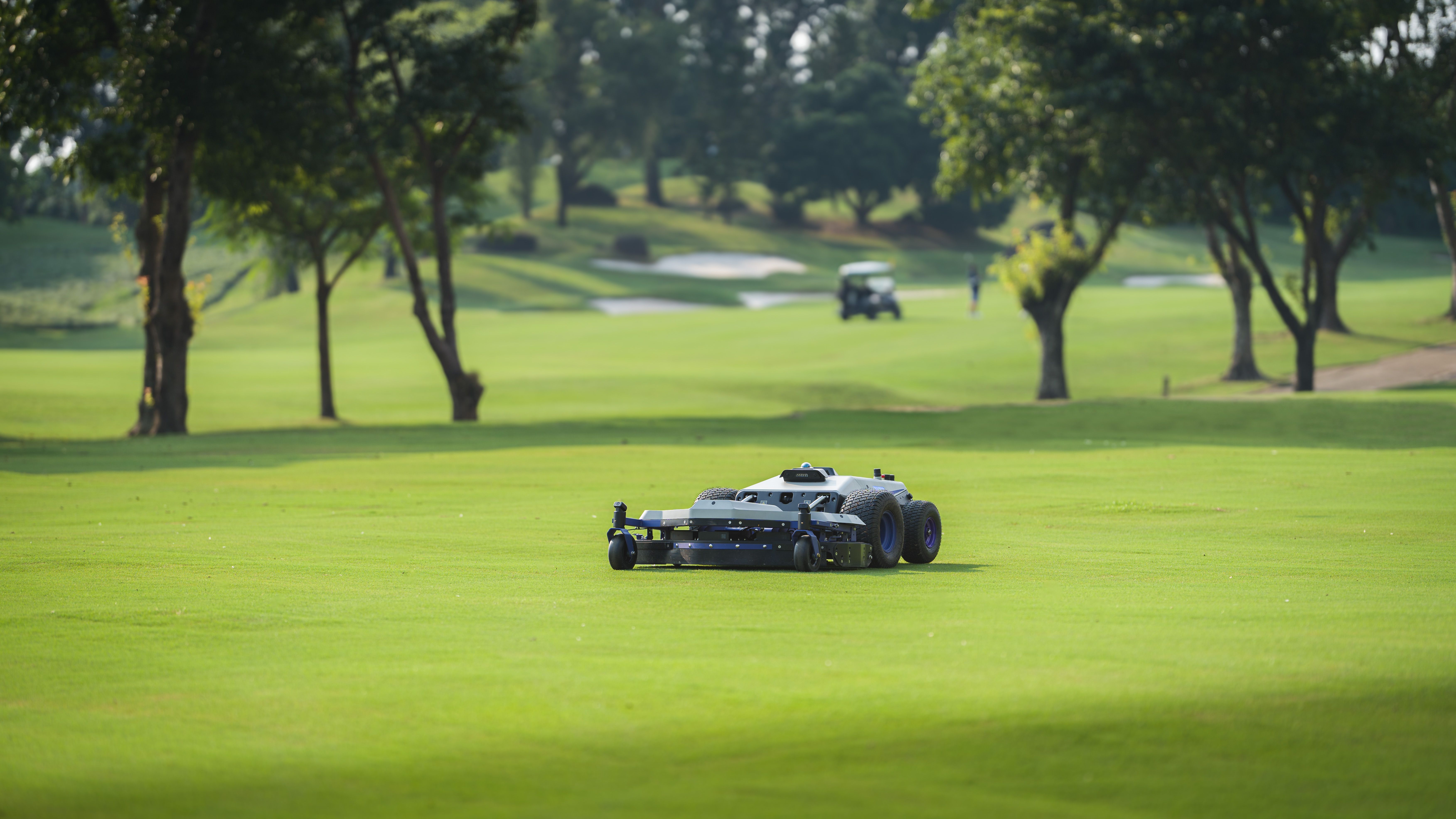
PANDAG G1 at a KLPGA Tournament Course: Autonomous Mowing for Tournament-Ready Turf
PANDAG G1 was deployed at a KLPGA tournament course in South Korea for autonomous mowing. This case follows how G1 was introduced into the course's turf maintenance workflow, from preparing mowing areas to operating the mower in a professional golf environment.
01 Inside the KLPGA Tournament Course
Tournament golf courses require consistent turf maintenance while accommodating practice sessions, competitions, and other course activities. Mowing activities need to be carefully coordinated, and equipment needs to work across designated areas without interfering with the wider operation of the course.
At this KLPGA tournament course in South Korea, PANDAG G1 was used for autonomous mowing as part of the existing maintenance process.
The application provided a practical environment for observing how a commercial robotic mower can be integrated into professional golf course maintenance, particularly when recurring mowing tasks need to be carried out across defined turf areas.
Rather than changing the entire maintenance workflow, G1 was introduced as an additional mowing option within the course's existing operations. Its modular platform also provides flexibility to adapt to different commercial landscaping and grounds maintenance requirements.
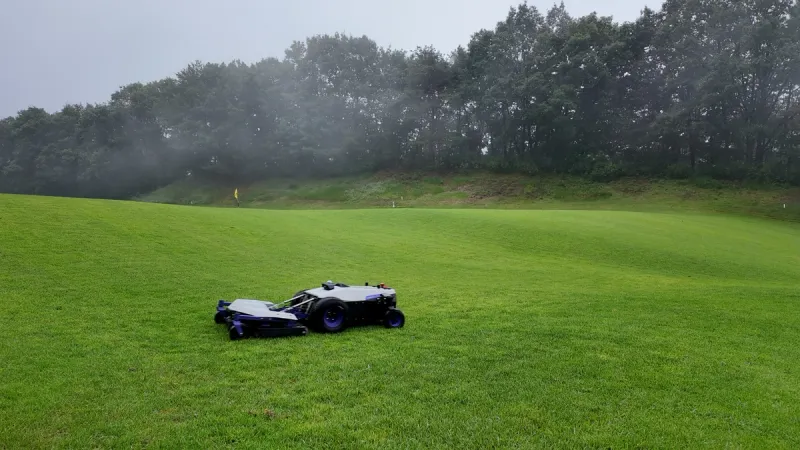
02 Preparing G1 for the Course
Before autonomous mowing begins, the operating area needs to be established.
The course team identifies the designated mowing areas and prepares the corresponding operating boundaries for G1. Once the area has been defined, the mower can operate autonomously within the assigned area.
This preparation is an important part of the process. Autonomous mowing does not mean the machine independently determines where it should operate. Establishing the mowing area beforehand provides G1 with a clear operating framework and allows the mowing task to be organized according to the course layout.
For golf course operators, this approach also makes it possible to separate different mowing areas and incorporate autonomous mowing into an existing maintenance workflow.
G1 can also be operated by remote control when needed, providing flexibility during preparation and other operating situations.
03 G1 in Operation on the Course
Once the mowing area has been established, G1 can carry out the assigned mowing tasks autonomously. Its navigation system combines RTK 4G positioning with LiDAR and AI Vision to support autonomous navigation.
This combination is designed for commercial outdoor environments where mowing areas can include trees, paths, and other course features.
G1's 48-inch cutting deck and commercial-grade platform are designed for larger mowing applications. Depending on the model and operating conditions, the G1 platform can support different mowing requirements across commercial landscapes.
For the KLPGA application, the focus was on using autonomous mowing within designated course areas while maintaining the broader workflow managed by the course team.
The mower can also be operated by remote control when required, providing operators with flexibility during different stages of the mowing process.
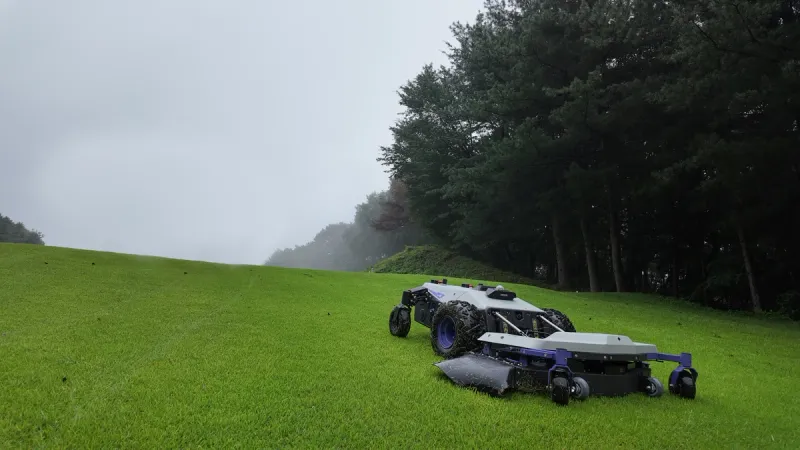
04 Working Around the Tournament Schedule
Tournament preparation involves more than maintaining the turf itself. Mowing activities need to be coordinated with the schedule of the course and other maintenance operations.
Autonomous mowing provides another way to handle recurring mowing tasks within designated areas. After the mowing area has been prepared, G1 can perform its assigned mowing tasks autonomously while course staff focus on other operational requirements.
The actual mowing process depends on factors such as the course layout, turf condition, weather, mowing requirements, and tournament activities.
For a professional golf environment, this means autonomous mowing can be treated as part of the overall maintenance workflow rather than as an isolated equipment function.
The KLPGA course provided an opportunity to apply this approach in a real operating environment, where turf maintenance needs to coexist with the wider demands of a tournament venue.
05 What the Field Application Shows
The KLPGA tournament course application demonstrates several practical considerations for golf course operators evaluating autonomous mowing.
Defined operating areas
G1 works within areas prepared before autonomous operation. This provides a structured way to introduce robotic mowing into an existing maintenance workflow.
Autonomous navigation
RTK 4G provides centimeter-level positioning without requiring a local RTK base station, while LiDAR and AI Vision support the navigation system during autonomous operation.
Autonomous and remote-control operation
G1 supports autonomous mowing as well as remote-control operation, allowing operators to use the appropriate mode depending on the task and situation.
Commercial mowing capability
With a 48-inch cutting deck and commercial-grade platform, G1 is designed for larger outdoor mowing applications.
These characteristics allow G1 to function as part of a broader golf course maintenance process, with autonomous mowing applied where it fits the course's operating requirements.
06 From Tournament Preparation to Daily Mowing
A tournament course provides a demanding environment for testing and applying mowing equipment, but the use of autonomous mowing does not have to stop when the tournament ends.
Golf course maintenance is a recurring process. Designated areas need to be mowed regularly, and the appropriate mowing frequency depends on turf conditions, season, course requirements, and operational needs.
The same basic workflow used at the KLPGA course can also support routine mowing: define the operating area, prepare the mower, carry out the mowing task, and use remote control when needed.
For golf course operators, the practical question is therefore not simply whether a robotic mower can cut grass, but how autonomous mowing can fit into the maintenance system already in place.
The KLPGA application provides one example of that integration. PANDAG G1 was deployed in a professional golf environment and used for autonomous mowing within designated course areas, demonstrating how commercial robotic mowing can become part of a structured turf maintenance workflow.